I recently published a GitHub repo containing the exercises of the wroclove.rb 2026 Ruby conference workshop "Building Rails SPAs in Frontend Ruby with Glimmer DSL for Web":
https://github.com/AndyObtiva/glimmer_commerce
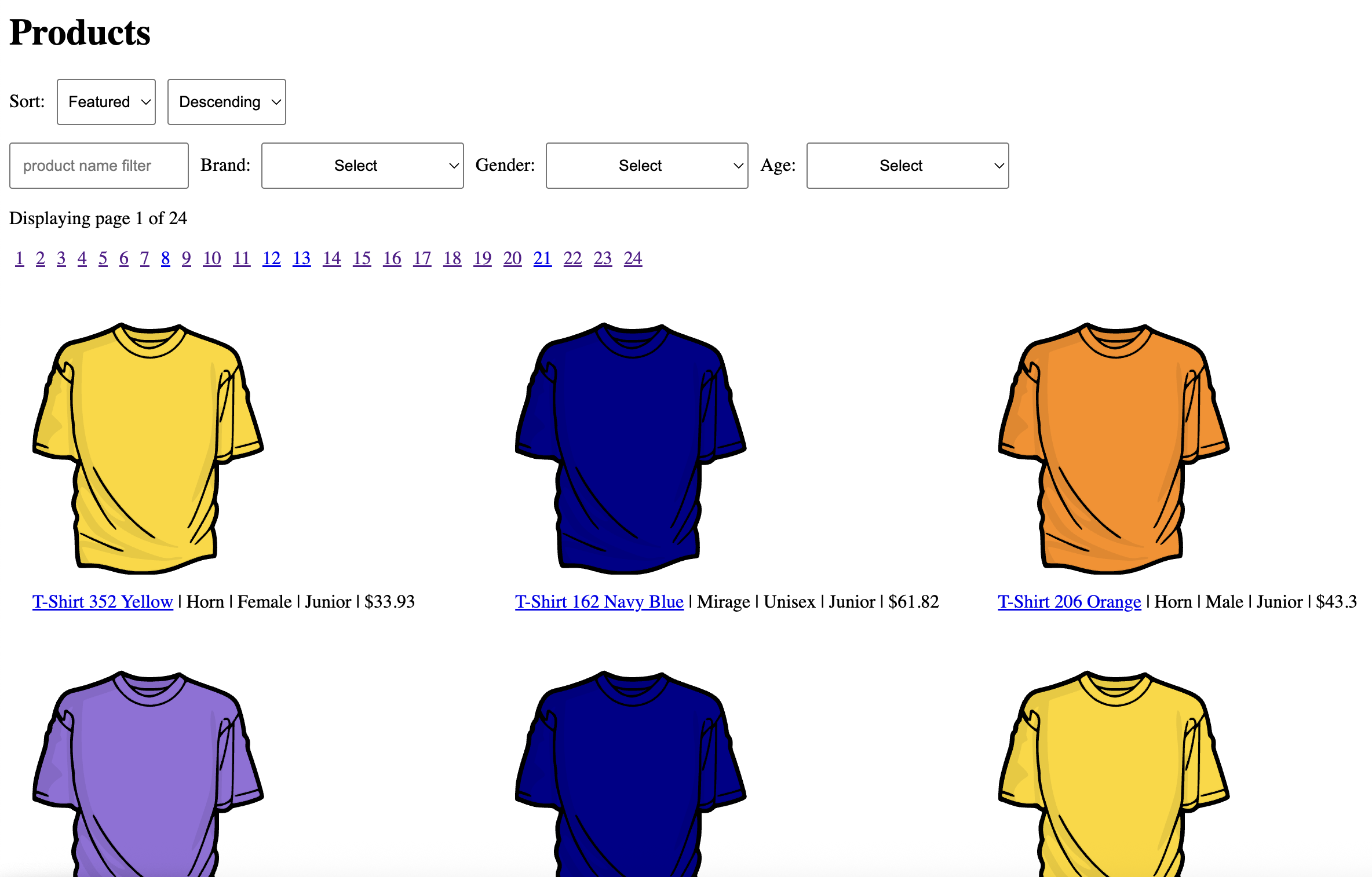
This GitHub repo provides the simplest and fastest way to learn Glimmer DSL for Web (the Ruby-in-the-Browser Rails Frontend Framework that gained Matz's approval by winning a Fukuoka Prefecture Future IT Initiative 2025 award). You don't have to configure it in a Rails web app yourself. You just clone the Glimmer Commerce Rails web app (an e-commerce example) that already has Glimmer DSL for Web and Opal (Ruby-to-JavaScript transpiler) configured, bundle & setup the Rails DB, and you're good to go with Glimmer Frontend Ruby awesomeness!!! The workshop includes 11 exercises that can be completed step by step following an agile incremental approach for building the product listing page of an e-commerce Rails web app. Glimmer DSL for Web is a highly innovative Frontend Framework that employs highly novel outside-the-box solutions that are only possible in Ruby. It is as different from traditional Frontend Development libraries as Rails was different from traditional Backend Development libraries when it first came out, so learning Glimmer DSL for Web requires humility and keeping an open-mind.
And, just in time for wroclove.rb 2026, Glimmer DSL for Web now has official Rails 8 setup instructions.
I am very grateful for having had the opportunity to conduct a workshop at wroclove.rb 2026, and I am very appreciative of their mission "We want to confront ideas" as they lived up to it 100%! This is a very good example of how a Ruby conference oughta be (not an echo chamber that runs away from any ideas that threaten the Rails Frontend Development status quo)! I thank the wroclove.rb 2026 staff for the nice letter and cookies they shared with me at the conference.


Feedback at the end of the workshop was all positive. Attendees were very excited for the simplicity and productivity benefits of Glimmer DSL for Web and Frontend Ruby over JavaScript! One attendee described the project's Ruby Frontend approach as very promising. Another attendee mentioned that he thinks React.js is absolutely horrible and normally uses Vue.js, but is happy to have discovered a Ruby Frontend alternative that is better than both React.js and Vue.js.
That said, after the workshop, I received one piece of negative feedback from an attendee who tried to set up Glimmer DSL for Web in a new Rails web app. He said that Glimmer DSL for Web was difficult to set up in a Rails web app as it requires about 10 manual steps. I heard you loud and clear! I will work on automating setup instructions behind a single Rails generator command before releasing version 1.0.0. In the meantime, if anyone wants this to be ready sooner, you are welcome to contribute the solution in a GitHub Pull Request.
Note that in real projects, I recommend that Ruby devs try to solve their problems pragmatically by exploring a spectrum of solutions instead of immediately jumping into a Frontend Development approach, but we are intentionally building everything as a Frontend solution in this workshop for learning purposes.
Normally, I recommend that Ruby devs explore these solutions by order of sophistication:
- Pure Rails Backend with Turbo if there are no Frontend interactions
- Pure Hotwire if there are a few Frontend interactions that can be driven completely from the Backend
- Hotwire + Stimulus if there are only a few custom Frontend interactions on top of basic Hotwire behavior, no more than 10 Frontend interactions.
- Glimmer DSL for Web when there is a need to build many Frontend interactions (over 10), build Frontend-local interactions that are NOT driven by the Backend (e.g. a painting app, a diagraming app, a very elaborate Frontend-heavy configuration app that does NOT need intermediate configuration steps to be driven by the Backend, etc...), or build Frontend interactions that are so sophisticated that they warrant reaching for a JS library like Angular/React/Vue/Svelte/Ember (Glimmer DSL for Web enables Ruby devs to build any React/JS feature in half the time or less and with about half the code, albeit much simpler Ruby code)


No comments:
Post a Comment